
Hair is a deeply personal aspect of our appearance. For some, frustration can stem from unwanted hair growth in areas such as the legs, bikini line, or face. For others, worry arises from noticing thinning hair around the scalp, temples, or crown. Interestingly, both concerns originate in the same place: the hair follicle. Hair is not only for beauty. From a physiological standpoint, it can reveal important clues about follicular health, hormones, inflammation, stress levels, and overall wellness.
The answer lies in understanding how the follicle behaves beneath the surface. In this blog, we break down the science behind professional waxing, explain why consistency is relevant for long-term hair reduction, and explore how clinical-grade scalp support products like Nutrafol and Zenagen help nourish the hair you want to keep.
Waxing is a process known as mechanical epilation, meaning the hair is removed directly from the root rather than cut at the surface, as with shaving. During waxing, the hair is pulled out from the follicle, including the bulb located near the dermal papilla. The dermal papilla is the structure responsible for delivering nutrients and blood supply to the follicle. Repeated waxing gradually weakens the follicle over time. This process is called hair follicle miniaturization. In simple terms, the follicle becomes less robust after repeated disruption, often causing hair to grow back finer, softer, and sparser.
This is one reason many clients notice that consistent waxing eventually leads to easier maintenance and smoother skin between appointments. Consistency matters because hair grows in cycles. Waxing every 4 to 6 weeks helps target hair during the anagen phase, the active growth stage when hair remains connected to the blood supply. Removing hair at this stage offers the best opportunity for long-term reduction and weaker regrowth.
Every strand of hair moves through three distinct phases:
Anagen Phase
This phase is the active growth stage. The hair remains attached to the follicle and receives nutrients through the blood supply. Waxing during this phase is most effective.
Catagen Phase
This transitional stage occurs when growth slows, and the follicle begins to shrink.
Telogen Phase
This is the resting phase. Eventually, the hair sheds naturally, and a new cycle begins.
Because not all hairs are in the same phase at the same time, waxing cannot permanently eliminate growth. Some follicles remain dormant during treatment and later reactivate. This is why waxing should be viewed as a hair management tool rather than a permanent solution. Unlike laser hair removal or electrolysis, waxing weakens the follicle but does not fully destroy it. With consistent maintenance, however, many people experience dramatically reduced regrowth over time.
arer skin.
While body hair removal focuses on slowing growth, scalp care often has the opposite objective. Healthy scalp hair depends on maintaining a balanced environment where follicles can thrive. Hair thinning is rarely caused by one factor. Scalp health is often influenced by hormones, stress, nutrition, inflammation, circulation, and environmental buildup.
One of the most significant contributors to hair thinning is DHT, short for dihydrotestosterone. DHT is a hormone linked to a significant number of hair loss cases. Over time, excess DHT can shrink follicles, shorten growth cycles, and reduce hair density. Stress is another major factor. Elevated cortisol levels can disrupt the growth cycle and contribute to shedding, especially during periods of physical or emotional strain. This is why a holistic approach matters. Supporting hair growth requires attention both internally and externally.
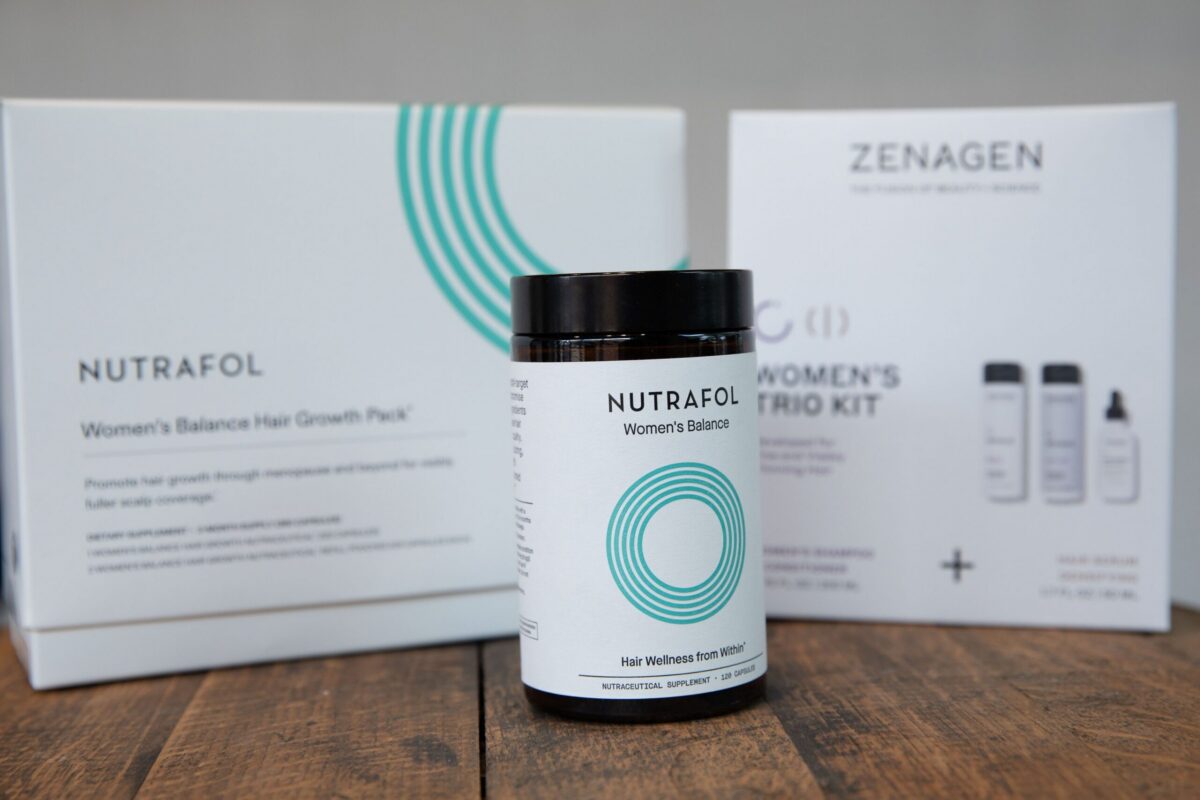
At Skinworks Wellness & Aesthetics, we recommend options that are based on clinical research and support scalp health, such as:
Nutrafol is classified as a nutraceutical, meaning it combines nutritional support with clinically studied ingredients designed to improve hair wellness. Rather than focusing on only one issue, Nutrafol targets four major contributors to thinning hair:
In clinical settings, Nutrafol is often recommended because it supports the body systemically rather than masking symptoms temporarily. It is important to set realistic expectations. Hair restoration is a gradual process. Most individuals require consistent use for 3 to 6 months before visible improvements in density and fullness become noticeable.
Zenagen Revolve is a professional-grade hair wellness system designed to support follicular health directly at the scalp level. The formula works by naturally helping inhibit DHT activity using ingredients such as green tea and saw palmetto. These ingredients help create a healthier scalp environment while supporting stronger, fuller-looking hair.
One of the reasons why clients love Zenagen is its simplicity. The treatment replaces a standard shampoo and conditioner and works within a short five-minute application during regular washing routines. For individuals noticing early thinning or increased shedding, this type of topical support can become an important part of long-term scalp maintenance.
Prioritize Exfoliation After Waxing
Post-wax care is essential for preventing ingrown hairs and irritation. Gentle exfoliation helps remove dead skin buildup and allows new hair to grow properly through the surface.
Support Healthy Scalp Circulation
Scalp massages improve circulation and help deliver oxygen and nutrients to the follicles. Consistent scalp stimulation can support healthier follicular function over time.
Never Skip the Consultation
Hair removal and hair restoration are highly individualized. Factors such as hormones, medications, skin sensitivity, stress, and genetics all play a role in treatment outcomes. Professional guidance helps create a plan tailored to your specific needs.
If your goal is to slow hair growth or promote fuller, healthier hair, it’s important to focus on what happens at the follicle level. Understanding how follicles react to stress, hormones, treatments, and consistent care can help you manage your hair more effectively. At Skinworks Wellness & Aesthetics in Hendersonville, TN, we believe hair care should be approached as part of your overall wellness, not just aesthetics. Smooth skin and healthy scalp hair both begin with informed, personalized care.
Book a personalized consultation to explore clinical solutions for healthier hair and scalp support.